



In Africa, time moves at a different pace. Everything takes time. Observing. Driving. The little events of everyday life. But anyone who ventures onto the continent,will be rewarded: with the greatestlargestgreatest animal paradises on earth.
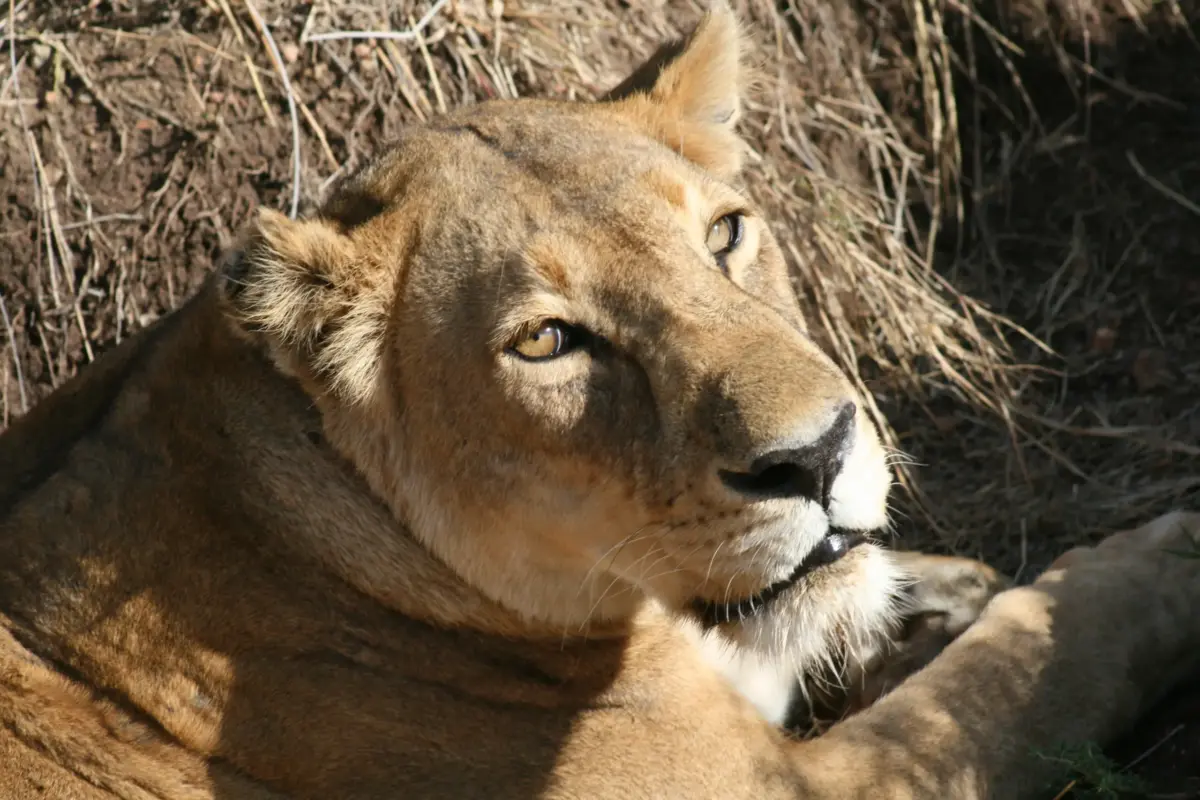
Hakuna matata? Well, there are problems here, even if this common phrase in Kiswahili claims the opposite. When you have your third "punch," i.e., a flat tire. Or when your supplies have once again fallen victim to the screeching baboons that climb through open windows. But these minor annoyances are forgotten when five helpful people appear out of nowhere next to the car with a flat tire. A family of lions wanders down the road in front of you. The sun rises red-hot over the savanna.
Philbert and Jabali accompany us on our tour through the Serengeti. This is definitely the best way to go on safari: with a driver who chooses the best route and skillfully avoids potholes, and a guide who seems to be a walking encyclopedia.
There are tons of lessons to be learned about safaris. The most important one is that everything is different in Africa. Roads are swallowed up by sand, ATMs don't work (which is why you should always have a sufficient supply of US dollars), and the hippo pool, where hippos can usually be seen, is empty. "Pole, pole," Jabali grins, "take it easy." If the hippos aren't there today, maybe they'll be there tomorrow. In four days we will be in Arusha, where there is a bank that exchanges dollars (which it then doesn't do) and Philbert knows all the ways. Even without a map. On the ascent to the Ngorongoro Crater, our jeep breaks down and can only be persuaded to make it through the last stage to the camp at the crater rim, almost 3000 meters high, by using all of our water reserves. This is also where the urn containing Bernhard Grzimek's ashes is located, directly at the foot of the memorial stone for his son, whose plane crashed in 1959 after colliding with a vulture. By now, everyone is taking not only the wilderness but also the potential dangers of this continent seriously.
The drive from Ngorongoro Crater to Serengeti National Park takes a good five hours. A distance of around 80 kilometers. Once you finally arrive, you have to let go of the idea that great dramas are constantly unfolding here in the animal world. Instead, you can easily spend two hours watching a leopard lying in a tree from your safari car. If you're lucky, it might change position once. A kudu trots beneath it. But otherwise, nothing happens. Instead, we watch two lion cubs having fun with a meerkat. We drive endlessly behind several striped backsides that refuse to be deterred from their path. And we marvel at the jumping impalas, which are so ubiquitous in the landscape of the savannah that they are hardly noticed. We spend the night in a camp in the middle of the Serengeti. Without any significant fences. An evening around the campfire under the African starry sky is an essential part of any tour. In the darkness, the senses are heightened, perceiving the roar of lions, the cackling of hyenas, and the screeching of baboons as unnaturally loud. In the morning, the sun rises like a red ball above the acacia trees, bathing the savanna in soft light. Large paw prints lead around the camp. Warthogs scurry excitedly back and forth with their tails raised. A few antelopes graze peacefully in the bushes. With our cup of coffee in hand, we let the scenery sink in. An African postcard idyll.
Animals have permanent residence rights in this Garden of Eden. And depending on the season, there are different numbers in different areas. In September, the Mara plains appear black. Wildebeests as far as the eye can see. A few zebras in between. With the onset of the rainy season in November, they migrate without a visa across the border from Tanzania to Kenya, from the vastness of the Serengeti across the Mara River to the Masai Mara. You can only hope that such a trek does not cross the road directly in front of your car. Because then you have to wait. Wait a long time. But to the delight of tourists and lions, the population of wildebeests and zebras is growing steadily. Thanks to Bernhard Grzimek and the then president of Tanzania, Julius Nyerere, a third of Tanzania is now under protection. The situation is similar in neighboring countries. And Grzimek? Everyone here knows him. "Ah, Germans! Like Grzimek! Good guy!" we hear from the gas station attendant in Karatu.
You will have the best safari experience when you discover the diversity of East African countries. Simple lodges and luxury camps. Large animals and small experiences at the roadside. Lively cities and lonely steppes. Mount Kenya and the beaches of the Indian Ocean. Once you have experienced a cheesy African sunset by the fire and listened to the sounds of the night, you will never want to miss this experience again. Or how about feeling a touch of "Out of Africa" in a luxurious lodge? Dining at white-covered tables and enjoying the view of the hippo pool with a glass of whiskey in your hand?
No matter how you choose to discover Kenya or Tanzania, let yourself be enchanted by the African spirit. Count zebra crossings in the Mara and watch fishermen on Lake Victoria. Marvel at thousands of flamingos on Lake Nakuru or wait for the clouds to clear from the summit of Kilimanjaro. It is difficult to say goodbye to this piece of earth so richly blessed by creation. "We hadn't left Africa yet," Ernest Hemingway once reported, "but when I woke up at night, I lay there listening, already homesick for it." Anyone who has ever experienced Africa knows what he meant.
©Susanne Pinn